
How to adapt tutorial techniques for truly personalized, elegant artistry?

Beyond the Brushstroke: Crafting Your Signature Look
In the vast ocean of makeup tutorials available online, it’s easy to get lost in the pursuit of replicating a look seen on someone else. While these guides offer invaluable foundational skills, true elegance in makeup artistry stems from personalization. The challenge isn’t just to mimic, but to adapt – to take a technique and mold it to suit your unique features, skin type, and personal aesthetic. This article will guide you through transforming generic instructions into a bespoke beauty regimen, empowering you to create artistry that is authentically, exquisitely yours.
Understanding Your Canvas: The Foundation of Personalization
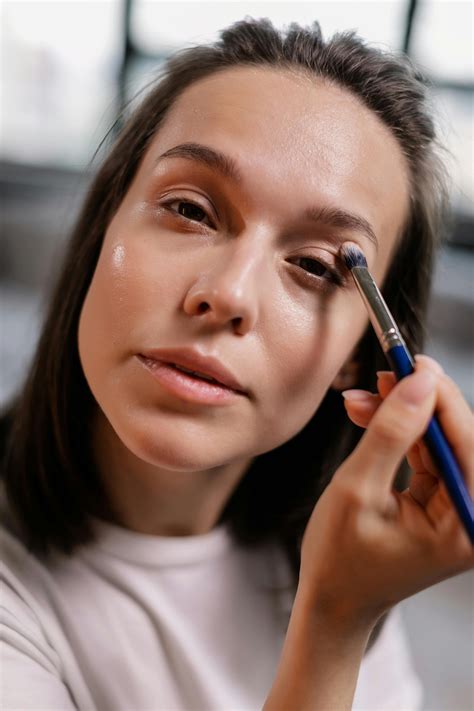
Before you can adapt, you must understand what you’re working with. Your face is a unique canvas, and recognizing its nuances is the first step toward personalized artistry.
Face Shape and Feature Analysis
Most tutorials are demonstrated on a specific face shape, eye shape, or lip structure. What looks stunning on an oval face might not translate perfectly to a square or heart-shaped face. Take the time to identify your own face shape (oval, round, square, heart, long, diamond) and key features like eye set (close-set, wide-set, deep-set, hooded), brow arch, and lip fullness. This understanding will inform how you adjust contouring, highlight placement, eyeliner wings, and eyebrow shaping taught in tutorials.
Skin Type and Undertone Considerations
The perfect foundation or primer demonstrated in a tutorial might not be ideal for your skin type. Oily, dry, combination, or sensitive skin all require specific product formulations. Similarly, understanding your skin’s undertone (cool, warm, neutral, olive) is crucial for selecting the right foundation, concealer, blush, and eyeshadow shades that truly enhance your complexion, rather than clash with it. A tutorial’s suggested color palette might need to be shifted to align with your personal undertone for a harmonious, elegant finish.
Deconstructing Tutorials: The Art of Adaptation
Once you know your canvas, you can begin to critically analyze tutorials. Instead of blindly following, learn to identify the core technique and how to modify its application.
Identify Core Techniques vs. Specific Products/Shades
Every tutorial has a fundamental technique it’s trying to convey – perhaps it’s a specific blending method for eyeshadow, a unique way to apply blush for lift, or a contouring strategy. Separate these core techniques from the specific brands, product types (cream vs. powder), or shade choices the demonstrator uses. Focus on understanding the ‘why’ behind the action, rather than just the ‘what’. For instance, a cut crease technique can be achieved with various products and colors; the essential part is the precise definition of the crease.
Modifying Application for Personal Symmetry and Balance
Your goal is to achieve balance and enhance your features, not to perfectly mimic another’s. If a tutorial shows applying blush on the apples of the cheeks, but you have a round face, you might adapt by applying it slightly higher and more diagonally to create an uplifting effect. If you have hooded eyes, a winged liner technique might need to be adjusted to a “bat wing” or fanned-out style to be visible when your eyes are open. Small adjustments in angle, placement, and intensity can make a monumental difference in how a technique translates to your face, achieving a more flattering and elegant result.
Product Personalization: Making It Your Own
Beyond technique, product choices are pivotal in customizing your look.
Shade Matching and Color Theory
Don’t stick to the exact eyeshadow or lipstick shade suggested in a tutorial if it doesn’t flatter you. Apply basic color theory: cool tones enhance warm undertones, and warm tones enhance cool undertones. Experiment with variations of a color family that work best for your skin tone and eye color. For example, if a tutorial uses a bright pink blush, but you have warm undertones, you might opt for a peachy-pink or coral shade to achieve a similar vibrant effect that harmonizes better with your complexion.
Texture and Finish Choices
The finish of a product (matte, satin, dewy, glittery) dramatically changes the outcome. If a tutorial features a highly dewy foundation but you prefer a more natural or semi-matte look, swap it for a similar shade in your preferred finish. The same goes for eyeshadows, blushes, and lip products. Matching the texture and finish to your personal preference and skin needs ensures comfort and confidence, contributing to that elegant artistry.
Practice, Experimentation, and Refinement
Personalized artistry isn’t achieved overnight. It’s a journey of continuous learning and self-discovery.
The Importance of Self-Correction and Play
Treat your makeup application as a form of play. Don’t be afraid to try new things and make mistakes. The mirror is your best friend for self-correction. Observe what works, what doesn’t, and why. Take photos in different lighting conditions to see how the makeup truly looks. This iterative process of trying, observing, and adjusting is where true skill and personalization are honed.
Building a Personal Makeup Journal
Consider keeping a simple journal or photo album of your makeup looks. Note down the techniques you used, the products that worked well (and those that didn’t), and any adaptations you made from a tutorial. Over time, this personal archive will become an invaluable resource, reflecting your growth and defining your unique aesthetic. It helps you recognize patterns in what flatters you and builds confidence in your decision-making.

Embrace Your Unique Elegance
Adapting tutorial techniques for truly personalized, elegant artistry is about shifting your mindset from imitation to innovation. By deeply understanding your unique features, critically analyzing and modifying techniques, and making informed product choices, you transcend the limitations of one-size-fits-all beauty. The result is not just a perfectly applied face of makeup, but a confident expression of your individual beauty, imbued with a timeless elegance that is uniquely and beautifully yours.