


How can I apply tutorial techniques to my unique features for enhanced artistry?

Beyond Copying: Embracing Personalized Makeup Artistry
Many of us turn to makeup tutorials for inspiration and guidance, eager to replicate the stunning looks we see online. However, the models in these tutorials rarely share our exact facial structure, eye shape, or skin tone. This often leaves us feeling frustrated when a technique that looks flawless on screen doesn’t quite translate to our own unique features. The key to truly enhanced artistry lies not in perfect replication, but in intelligent adaptation. This article will guide you on how to dissect tutorial techniques and skillfully apply them to your individual canvas, creating looks that are not just beautiful, but uniquely yours.
Decoding Your Unique Features: The Foundation of Customization
Before you can adapt, you must first understand your own canvas. Take time to analyze your facial anatomy. What is your face shape (oval, round, square, heart, long)? How do your eyes sit (deep-set, hooded, prominent, almond, downturned, upturned)? What is the natural shape and size of your lips? Do you have a prominent brow bone, a wider nose, or specific skin undertones?
Identifying these unique characteristics is the most crucial step. For instance, a winged liner technique designed for an almond eye may need significant modification for a hooded eye. Similarly, contour placement will vary dramatically depending on whether you have a round face seeking definition or a long face aiming for width. Spend time in front of a mirror, perhaps even taking photos, to objectively assess your features. This self-awareness will empower you to make informed decisions about adapting techniques.
Deconstructing Tutorial Techniques
When watching a tutorial, shift your focus from merely copying the steps to understanding the *principles* behind them. Why is a certain product applied in a specific area? What effect is the artist trying to achieve? For example, contouring is about creating shadows to recede features, while highlighting brings features forward. Blending isn’t just a step; it’s about seamless transitions and diffused edges.
Break down each technique into its core components: product type, tool used, application method (stippling, sweeping, dabbing), placement, and intensity. Once you grasp the fundamental ‘why’ and ‘how’ of each step, you can begin to mentally (or physically) adjust it to suit your features. This analytical approach transforms you from a follower into an interpreter.
Adapting & Modifying for Your Face
Now comes the exciting part: putting your understanding into practice. For a winged liner, instead of drawing a straight line if you have hooded eyes, try sketching it with your eyes open to find a flattering angle that avoids getting lost in the fold. For contouring, if you have a round face, focus on creating shadows along the temples and under the cheekbones to add angles. If you have a long face, contouring directly under the chin and along the hairline can shorten its appearance.
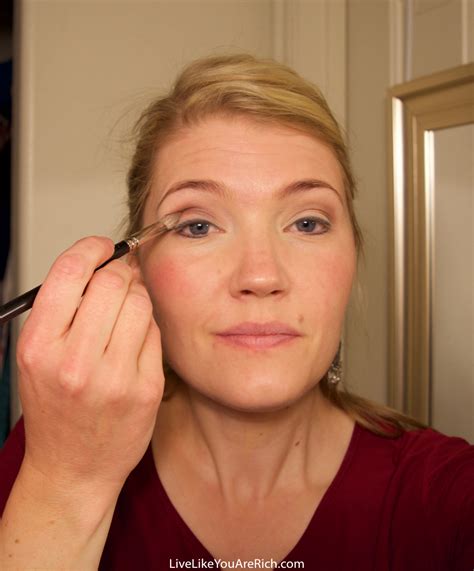
Lip techniques can be adjusted by slightly overlining only in specific areas (like the cupid’s bow or center of the bottom lip) to enhance shape without looking artificial. Blush placement, too, can sculpt: higher on the cheekbones for a lift, or closer to the apples for a fuller look. Even your choice of colors should be customized; warm tones might flatter one skin tone, while cool tones enhance another. Experiment with different brush angles, product amounts, and application pressure.
The Art of Experimentation and Practice
True artistry is not achieved overnight; it requires consistent practice and a willingness to experiment. Don’t be afraid to try a technique differently each time until you find what works best for you. Dedicate specific sessions to trial and error, perhaps focusing on one feature at a time.
Take pictures of your makeup from different angles and in various lighting conditions. Sometimes what looks good in a mirror up close may appear different in a photo. Keep a small journal of what worked, what didn’t, and why. This documentation will help you refine your techniques and build a repertoire of personalized looks.
Elevating Your Signature Style
As you consistently adapt tutorials and understand your features better, you’ll naturally begin to develop a signature style. This is where your enhanced artistry truly shines. Your makeup will no longer be a copy, but an authentic expression of your personality and a celebration of your unique beauty. You’ll gain confidence in your application and make intuitive decisions about what suits you best.
Continue to seek inspiration from tutorials, but always filter them through the lens of your own unique features. Consider advanced techniques like color theory, texture play, and strategic light placement to further elevate your looks. The journey is continuous, leading to a deeper understanding of makeup as a powerful tool for self-expression.

Your Face, Your Canvas, Your Art
Applying tutorial techniques to your unique features transforms makeup from a set of rules into a boundless form of artistic expression. By understanding your face, deconstructing techniques, and embracing experimentation, you unlock a level of artistry that is deeply personal and truly impactful. Embrace your unique beauty, learn to adapt with confidence, and let your makeup become a testament to your individual style.