


How to adapt advanced artistry techniques for your unique features, defining true elegance?

In a world saturated with beauty trends and one-size-fits-all tutorials, finding your true elegance through makeup can feel like a daunting task. While a flawless cat-eye or perfectly sculpted cheekbones look stunning on Instagram, these techniques are often designed for a generic ideal, not for the intricate beauty of your individual face. True artistry lies not in replication, but in adaptation – transforming advanced techniques to harmonise with, and enhance, your unique features, revealing an elegance that is authentically yours.
Beyond Generic Rules: Embracing Your Canvas
Many popular makeup techniques gain traction because they work well on a broad range of faces, or on specific, commonly idolized facial structures. However, applying these without consideration for your own bone structure, eye shape, skin texture, or lip contours can lead to a look that feels disconnected or unnatural. Your face is a unique landscape, an intricate tapestry of features that deserve a bespoke approach, not a cookie-cutter application.
Understanding your unique facial geometry is the first step. Are your eyes wide-set or close-set? Do you have a prominent brow bone or a softer facial curve? Are your lips naturally full or thinner? Embracing these individual characteristics is crucial for unlocking your most elegant look.

Deconstructing Advanced Artistry for Personalization
Advanced artistry techniques, at their core, are about understanding the interplay of light, shadow, color, and texture. Instead of blindly following steps, focus on the *principles* behind them. For example, a dramatic cut crease isn’t just about drawing a line; it’s about creating depth and lift through contrast. A sharp contour isn’t merely about applying a dark shade; it’s about manipulating light to create the illusion of definition.
When you deconstruct a technique, you can rebuild it to suit your face. Consider contouring: while a standard contour might suggest placing shadow under the cheekbones, someone with very full cheeks might benefit from a slightly higher placement to create a lifting effect, while someone with a very angular face might need a softer, more blended application to avoid harshness. It’s about strategic placement and intensity tailored to enhance your natural bone structure, rather than imposing an artificial one.

Mastering Feature-Specific Adaptations
Eyes: Beyond the Standard Wing
The perfect eyeliner wing, smokey eye, or brow shape is profoundly personal. For hooded eyes, a ‘flick’ of liner needs to be adapted to be visible when the eyes are open, perhaps starting thinner and thickening outwards. Monolids might benefit from a strategically placed light shade on the center of the lid to create depth. For close-set eyes, extending the liner slightly past the outer corner can create the illusion of width, while wide-set eyes might benefit from a darker inner corner. Similarly, brow shaping should complement your specific eye and face shape, not just follow a trend.
Lips: Enhancing Your Natural Symmetry
Lip techniques range from overlining to creating ombre effects. If you have a naturally fuller top lip, overlining only the bottom lip (or vice-versa) can create better balance. For slightly asymmetrical lips, precise liner work can subtly correct and create the illusion of symmetry without looking artificial. The choice of color and finish also plays a role; darker, matte shades can make lips appear smaller, while lighter, glossier finishes can add volume.
Skin: The Foundation of Radiance
Foundation, concealer, highlight, and blush are the backbone of any makeup look. Adapting these means selecting formulas and applying them in ways that complement your skin type, texture, and face shape. If you have textured skin, heavy contouring might emphasize it; instead, strategic highlighting can draw attention to smooth areas. For a rounder face, applying blush slightly higher on the cheekbones can create a lifting effect. The goal is to create a seamless, radiant complexion that looks like *your skin*, only better.
The Art of Observation and Practice
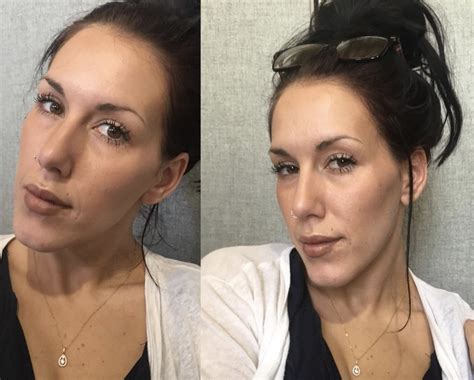
Developing the skill to adapt advanced techniques requires keen observation and consistent practice. Spend time in front of the mirror, studying your features. Take photos of your makeup from different angles and in various lighting conditions to see how the application truly translates. Experiment with different placements, intensities, and products. Don’t be afraid to try, fail, and learn from each attempt. Consider attending workshops or seeking advice from professional artists who specialize in bespoke beauty – they can offer invaluable personalized insights.
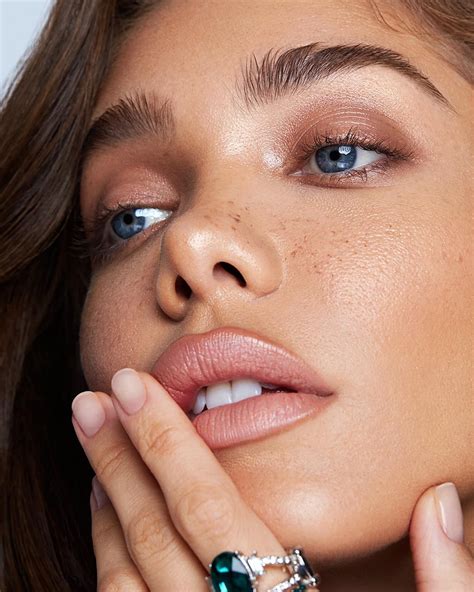
Defining True Elegance: Confidence in Authenticity
True elegance in makeup isn’t about achieving a flawless, airbrushed look that conforms to an external ideal. It’s about harnessing advanced artistry to celebrate and enhance the beauty that is uniquely yours. When your makeup harmonizes with your features, it looks effortless, refined, and undeniably sophisticated. It’s about feeling confident and comfortable in your own skin, knowing that every stroke and shade has been carefully considered to reflect your authentic self.
Ultimately, true elegance is an inner radiance projected outwards, amplified by makeup that respects and honors your individuality. It’s the quiet confidence that comes from looking in the mirror and seeing the most polished, authentic version of yourself, not a copy of someone else.

Embrace the journey of discovery, experiment with purpose, and allow your unique features to guide your hand. In doing so, you will unlock an artistry that defines true elegance, making every makeup application a personal statement of sophisticated beauty.