


Mastering personal elegance: Which tutorial tips translate best for *my* facial structure?
Decoding the Universal Language of Beauty Tutorials for Your Unique Face
In a world overflowing with captivating makeup tutorials, it’s easy to feel overwhelmed. From dramatic cut creases to flawless contouring, the internet offers an endless scroll of inspiration. But how often do you try a viral technique only to find it doesn’t quite work for you? The secret to truly mastering personal elegance lies not in mimicking every trend, but in understanding how to translate these tips to best suit your individual facial structure.
Generic advice, while well-intentioned, often falls short because every face is a unique canvas. Identifying your face shape is the foundational step to unlocking makeup techniques that enhance your natural beauty rather than fighting against it.
Understanding Your Face Shape: The First Step to Tailored Beauty
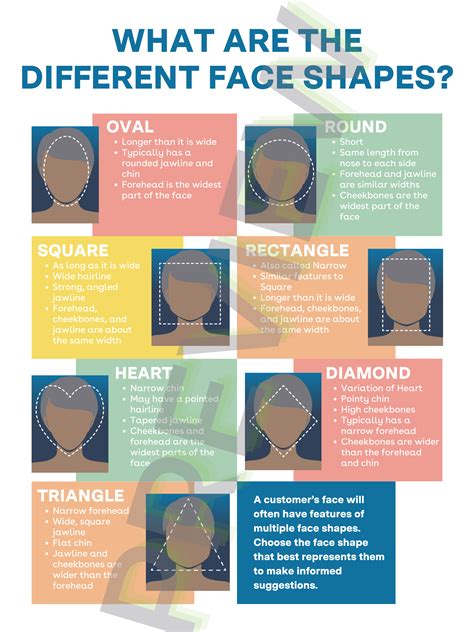
Before you can adapt any tutorial, you need to know your starting point. While there’s a spectrum of facial structures, most can be categorized into a few primary shapes: oval, round, square, heart, long (oblong), and diamond. Stand in front of a mirror, pull your hair back, and observe your jawline, forehead width, and the widest part of your face. Is your face longer than it is wide? Do you have a strong jaw or a softer, curved one? These observations will guide you.
Oval Face: The Balanced Canvas
Often considered the most balanced, oval faces are characterized by a forehead slightly wider than the chin, high cheekbones, and a gently rounded jawline. For oval faces, most tutorials will work with minimal adaptation. The goal is typically to enhance existing features rather than create new ones. Focus on subtle contouring to define cheekbones and highlighting the high points of the face.
Round Face: Adding Definition and Structure
Round faces are characterized by similar width and length, with soft, curved features and a full chin. The aim for round faces is to add dimension and length. Strategic contouring along the hollows of the cheeks, temples, and jawline can create the illusion of angles and elongation. Apply blush slightly higher on the cheekbones, sweeping upwards to lift the face.
Square Face: Softening Angles
Square faces feature a strong, angular jawline and a forehead of similar width. The goal here is often to soften the sharper angles. Contour along the temples and the corners of the jawline to create a more oval appearance. Focus highlighting on the center of the forehead, under the eyes, and on the chin to draw attention inward and soften the perimeter.
Heart Face: Balancing Proportions
Heart-shaped faces have a wider forehead, prominent cheekbones, and a narrower, sometimes pointed, chin. The key is to balance the wider upper half with the narrower lower half. Contour the sides of the forehead and temples to reduce width, and highlight the jawline and chin to give them a more prominent appearance. A soft blush applied below the cheekbones can also help balance the face.
Long (Oblong) Face: Creating Width and Shortening
Long faces are noticeably longer than they are wide, often with a narrow chin and forehead. The objective is to create the illusion of width and reduce perceived length. Apply contour to the very top of the forehead (hairline) and along the bottom of the chin to visually shorten the face. Highlight on the cheekbones, extending outwards towards the ears to add width. Horizontal blush application can also be very effective.
Diamond Face: Emphasizing and Softening
Diamond faces are characterized by a narrow forehead and chin, with wide, high cheekbones. For this shape, contour lightly on the cheekbones to soften their prominence if desired, and on the temples to reduce width. Highlight the forehead and chin to bring them forward and balance the width of the cheekbones.

Beyond Face Shape: Universal Principles for Personalization
While face shape provides a strong framework, individual features also play a crucial role. Techniques like contouring, highlighting, brow shaping, and lip enhancement are universally adaptable:
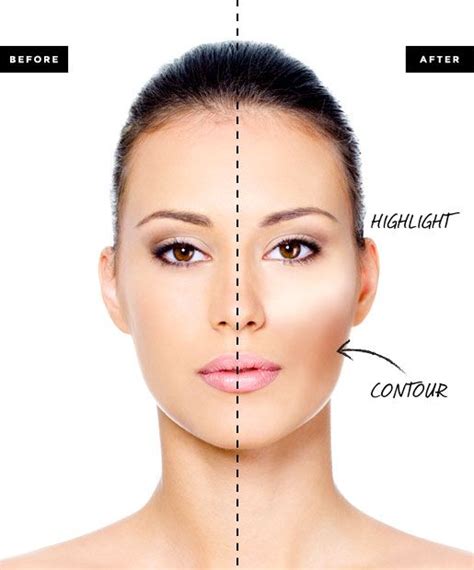
- Contouring: Always use a cool-toned shade, 1-2 shades darker than your skin, applied where shadows naturally fall (hollows of cheeks, jawline, temples, sides of nose) to create depth.
- Highlighting: Use a lighter, shimmery shade on the high points of your face (tops of cheekbones, brow bone, bridge of nose, cupid’s bow) to bring features forward.
- Brow Shaping: Your brows frame your face. Tailor their arch and length to complement your face shape – softer arches for angular faces, more defined for round faces.
- Lip Shaping: Overlining or subtly altering lip shape can balance your features. A fuller top lip can balance a heart-shaped face, while a slightly wider bottom lip can complement a long face.
The Power of Practice and Personalization
The beauty of personalized makeup is that it’s an ongoing journey of discovery. Don’t be afraid to experiment! What works for one person with a similar face shape might still need slight tweaks for you. Pay attention to your unique features, like eye shape, nose size, and lip fullness, and how they interact with your overall face shape.

Embrace Your Unique Canvas
Moving beyond one-size-fits-all tutorials and understanding how to adapt techniques for *your* facial structure is the ultimate beauty hack. It’s about empowering yourself with knowledge, celebrating your individuality, and creating looks that truly make you feel confident and elegant. So, next time you watch a tutorial, instead of blindly following, ask yourself: how can I make this work for *my* beautiful face?