
How to adapt online makeup tutorials for your unique elegance and artistry style?
Beyond Copying: Embracing Your Unique Beauty
Online makeup tutorials are an incredible resource, offering a treasure trove of techniques, trends, and inspiration from artists worldwide. However, the true magic isn’t in replicating a look pixel-for-pixel, but in understanding how to adapt these lessons to your own unique features, skin tone, and personal aesthetic. Your goal isn’t imitation; it’s inspiration that leads to innovation, allowing your individual elegance and artistry to shine through.
Every face is a distinct canvas, with unique bone structures, eye shapes, lip contours, and skin conditions. What looks stunning on a beauty guru with different features might not translate directly to your face, and that’s perfectly fine. The key is to become your own makeup artist, equipped with the knowledge to customize any tutorial to flatter your specific beauty.

Know Your Canvas: Assess Your Features
Before you even pick up a brush, a foundational step is to understand your own face. This self-assessment is crucial for making informed adaptations:
- Skin Tone and Undertone: Are you warm, cool, or neutral? This dictates which color palettes will enhance your complexion, rather than clash with it.
- Face Shape: Oval, round, square, heart, long, diamond? This influences contouring, highlighting, and blush placement.
- Eye Shape: Hooded, monolidded, almond, round, downturned, upturned? Each shape benefits from specific liner, shadow, and mascara techniques.
- Lip Shape: Full, thin, asymmetrical? This guides lip liner and lipstick application to balance and enhance.
- Brow Shape: Natural or sculpted? Brows frame the face and impact the overall balance of any eye look.
Armed with this knowledge, you can begin to see a tutorial not as a rigid instruction set, but as a flexible guide.
Deconstruct the Tutorial: What to Look For
When watching a tutorial, shift your focus from simply seeing the final result to understanding the underlying mechanics. Ask yourself:
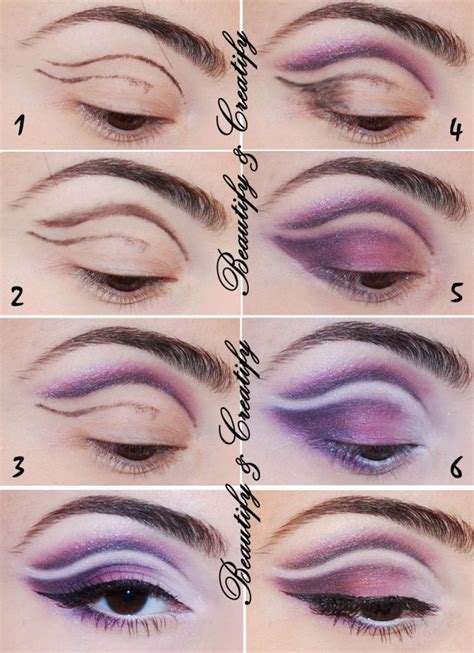
- What is the core technique being taught? Is it a cut crease, a smoky eye, a specific contouring method, or a blending trick?
- Why is the artist using specific products or colors? Is it for coverage, texture, luminosity, or to create depth?
- How is the light hitting their face? This impacts how colors appear and how highlighting/contouring performs.
- What tools are they using and why? Different brushes achieve different effects.
Adapt, Don’t Just Apply: Tailoring Techniques
This is where your unique artistry comes into play. Once you understand the ‘why,’ you can adjust the ‘how’ to suit you:
For example, if a tutorial features a sharp contour line, but you have a rounder face and prefer a softer look, adapt the product (perhaps a powder instead of a cream), the placement (slightly higher or more diffused), and the blending technique (less harsh, more blended into the hairline).
If the tutorial uses a vibrant blue eyeshadow, but blues don’t flatter your undertone or personal style, consider swapping it for a jewel-toned green, a rich plum, or even a neutral smoky grey that achieves a similar intensity but aligns better with your aesthetic. Always prioritize colors that make your skin and eyes pop.

Integrate Your Personal Elegance and Artistry
Your unique elegance isn’t just about what flatters your features; it’s about what resonates with your inner self. What makes you feel confident, beautiful, and authentic? Consider your lifestyle, your wardrobe, and the overall impression you want to convey.
Do you prefer a minimalist approach, or do you love dramatic flair? Do you gravitate towards classic elegance, or are you drawn to modern avant-garde styles? Don’t be afraid to mix elements from different tutorials, blending a soft eye look from one with a bold lip technique from another, to create a hybrid style that is distinctly yours. Your makeup should complement, not mask, your personality.

Practice, Experiment, and Trust Your Instincts
Like any art form, makeup requires practice. Don’t be discouraged if your first few attempts at adapting a tutorial aren’t perfect. Use each try as a learning opportunity. Dedicate time to experimenting with different applications, product placements, and color combinations. Play with different lighting to see how your makeup translates from bathroom mirror to natural daylight.
The beauty world is dynamic, but your personal style is timeless. Trust your instincts. If a look doesn’t feel right, even if it’s technically ‘correct’ according to a tutorial, change it. Document what works best for you – take photos, make notes – and build your own library of adapted techniques and favorite looks. This continuous process of learning and adapting will refine your skills and solidify your unique artistic voice.
Online makeup tutorials are powerful tools, but they are just the starting point. By understanding your unique features, deconstructing techniques, and integrating your personal style, you transform from a passive viewer into an active artist. Embrace the journey of adaptation, and in doing so, unlock a world where every makeup look you create is a genuine expression of your unique elegance and artistry.