


How do I translate video tutorial artistry to my unique features for an elegant, defined look?
Understanding Your Canvas: Beyond the Screen
Video tutorials offer an incredible wealth of makeup knowledge, demonstrating techniques from basic application to intricate artistry. However, the models in these videos rarely share your exact facial structure, eye shape, or skin tone. Attempting to replicate a look verbatim can often lead to a result that feels ‘off’ or doesn’t flatter your unique features. The true artistry lies not in imitation, but in translation – understanding the principles behind the techniques and adapting them to suit your individual beauty.
This guide will empower you to move beyond simple copying and instead become your own makeup artist, capable of achieving that elegant, defined look you desire by customizing any tutorial to perfectly fit you.
Decoding Your Unique Features
Before you can adapt, you must understand what makes you, you. Take some time to observe your face in good, natural lighting.
Face Shape Analysis
Your face shape (oval, round, square, heart, long, diamond) dictates where contour, highlight, and blush will be most effective. A tutorial might show contouring along the hollows of the cheekbones, but if you have a round face, you might extend it slightly to create more definition. If you have a long face, you might apply blush more horizontally to visually widen your face. Highlighting strategic points can also enhance or soften angles.
Eye Shape Specifics
Eye shape is perhaps the most critical factor for adapting eye makeup. Whether you have hooded eyes, monolid eyes, almond eyes, downturned, or upturned eyes, the placement of eyeshadow, eyeliner, and even false lashes needs careful consideration. A cut crease technique on an almond eye will look different on a hooded eye, where the crease might need to be drawn higher on the lid. Eyeliner might need to be thinner or thicker, winged differently, or even omitted on certain areas to best open up your specific eye shape.
Lip Shape and Skin Tone Nuances
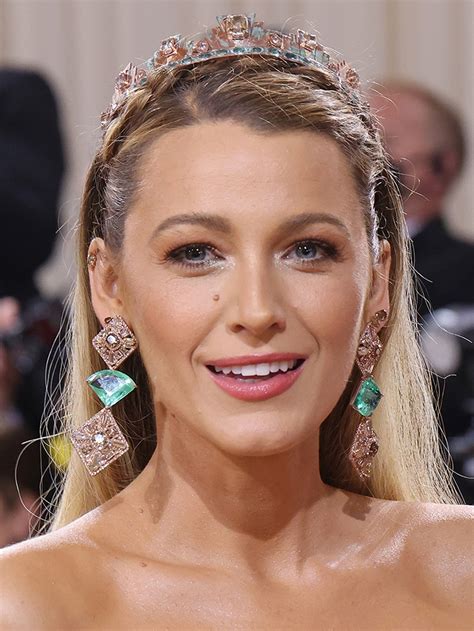
For lips, consider their natural fullness and symmetry. Some tutorials may emphasize over-lining, but you might only need it on specific areas, or not at all. Skin tone and undertone are crucial for foundation, concealer, and even blush and lipstick choices. A warm-toned red lipstick might appear vibrant on one skin tone but clash with another. Always swatch products on your jawline to find the perfect match.
The Art of Adaptation: Practical Steps
1. Identify the Core Technique
Watch the tutorial with a critical eye. Instead of focusing on the exact product or shade, ask yourself: What is the *goal* of this step? Is it to create depth? To lift? To brighten? To define? For instance, a winged liner tutorial’s goal is often to create an elongated, lifted look. How can you achieve that same *effect* with your eye shape?
2. Break Down and Rebuild
Deconstruct the tutorial into individual steps. For each step, consider:
- Placement: Where exactly should this go on my face/eyes? (e.g., instead of inner corner, perhaps slightly above for hooded eyes).
- Intensity: How much product do I need? (e.g., less contour for a softer look, more for dramatic definition).
- Shape/Direction: What angle or curve works best for my features? (e.g., a straight wing vs. a curved wing).
3. Experiment and Adjust
The first attempt won’t always be perfect. Treat your mirror as a practice canvas. Try applying eyeshadow or liner in slightly different positions or with varying amounts. Use a cotton swab with a tiny bit of micellar water for precise clean-ups and adjustments. Take photos in different lighting to see how the look translates off-camera.
Refining Your Signature Look
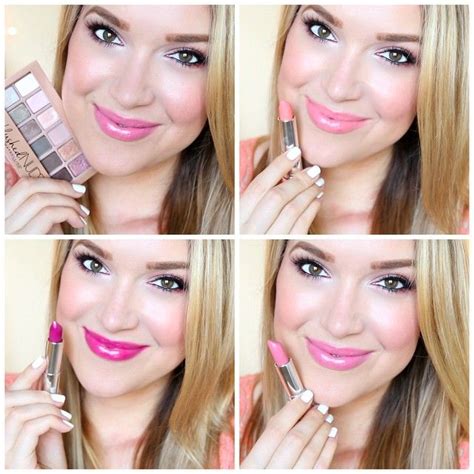
Once you start adapting, you’ll begin to develop your own signature techniques. Pay attention to how different products perform on your skin and how different colors interact with your natural complexion. Don’t be afraid to mix and match techniques from various tutorials, creating a personalized routine that highlights your best features.
Remember that an elegant, defined look isn’t about hiding your features, but about enhancing them. It’s about subtle precision that elevates your natural beauty. Practice makes perfect, and with each application, you’ll gain confidence in your ability to translate any artistry into a look that is uniquely and beautifully yours.
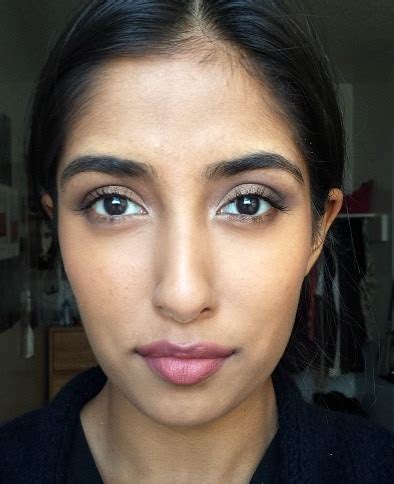
Embrace Your Radiance
Ultimately, makeup is a tool for self-expression and confidence. By understanding your unique features and learning how to adapt techniques, you’ll not only achieve more flattering results but also gain a deeper appreciation for your individual beauty. So grab your brushes, revisit those tutorials, and start translating that artistry into your very own elegant, defined masterpiece.