


How to personalize tutorial techniques for your unique features & skin type?

Beyond the Basics: Tailoring Makeup Tutorials to You
In the vast world of online makeup tutorials, it’s easy to get lost trying to replicate a look step-by-step. However, what works for one person might not work for another. The secret to truly stunning makeup isn’t about perfect imitation, but about intelligent adaptation. Personalizing tutorial techniques to your unique facial features and specific skin type is the key to unlocking your best look.
Generic advice rarely considers the nuances of your individual beauty. From the curve of your eyelids to the texture of your skin, every detail plays a crucial role in how makeup sits and appears. This guide will walk you through understanding your own unique attributes and how to confidently modify any tutorial to achieve a flattering, customized finish.
Understanding Your Unique Facial Features
Before you can adapt, you must first know what you’re working with. Take a moment to examine your own features in a mirror.
Face Shape
- Oval: Balanced proportions, slightly narrower jawline than cheekbones.
- Round: Soft curves, widest at the cheekbones, similar length and width.
- Square: Strong, angular jawline, forehead and jawline are similar width.
- Heart: Wider forehead, prominent cheekbones, tapering to a narrow chin.
- Long: Forehead, cheekbones, and jawline are similar width, but the face is noticeably longer than it is wide.
Eye Shape
- Almond: Slightly pointed ends, visible eyelid crease, iris touches top and bottom lids.
- Hooded: Extra skin folds down from the brow bone, obscuring the crease.
- Monolid: No visible crease, common in East Asian eyes.
- Round: Large, prominent eyes, white visible above or below the iris.
- Downturned: Outer corners of the eyes point downwards.
Other Features
Consider your lip shape (full, thin, asymmetrical), nose shape, brow arch, and the overall symmetry of your face. These all influence how contour, highlight, eyeliner, and lipstick will look.

Assessing Your Skin Type and Concerns
Your skin is the canvas, and its condition dictates everything from primer to foundation and even powder application.
Skin Types
- Oily: Excess sebum production, prone to shine, larger pores.
- Dry: Lacks moisture, can feel tight, flaky, or rough.
- Combination: Oily in the T-zone, dry or normal elsewhere.
- Normal: Well-balanced, neither too oily nor too dry.
- Sensitive: Reacts easily to products, prone to redness, itching, or irritation.
Common Skin Concerns
Are you dealing with acne, redness, dark spots, fine lines, or dehydration? These concerns will influence your product choices and application methods, especially for base makeup.

Translating Tutorials to Your Unique Profile
Foundation & Concealer
Adaptation: Always prioritize formulas suited to your skin type. Oily skin benefits from matte, long-wear options; dry skin needs hydrating, dewy finishes. For application, focus on evening out your tone, not masking your natural skin. Use concealer strategically on areas of concern, rather than a heavy full-face application if not needed.
Contour & Highlight
Adaptation: This is where face shape is paramount. A contour technique that slims a round face might make a long face appear even longer. For round faces, focus contour along the outer edges to create definition. For long faces, apply contour along the hairline and chin to visually shorten. Highlight should enhance your natural high points without accentuating texture if you have concerns like large pores.
Eye Makeup
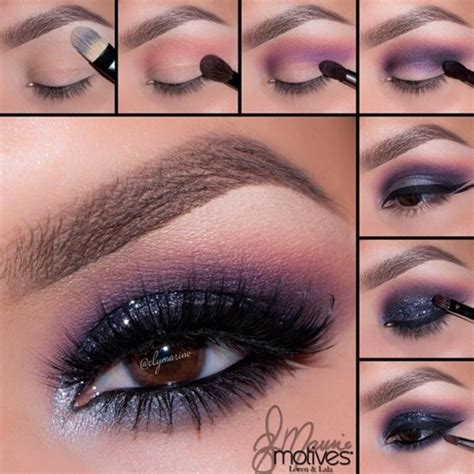
Adaptation: Eye shape is everything here. For hooded eyes, focus on extending liner outwards and placing darker shadows above the natural crease. Monolids often benefit from creating a gradient of color that builds upwards. Downturned eyes can be lifted with a winged liner angled slightly upwards. Experiment with placement and intensity to flatter your unique eye shape.
Lip Products
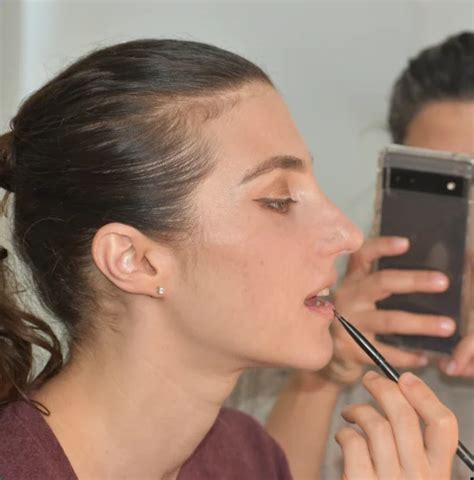
Adaptation: If you have thin lips, avoid dark matte shades that can make them appear smaller. Instead, opt for lighter, glossy finishes. For asymmetrical lips, a lip liner can be used to subtly correct the shape before applying lipstick. Full lips can carry off almost any shade or finish.
Tips for Successful Experimentation
- Start Small: Don’t try to adapt an entire look at once. Focus on one technique, like eyeliner or contour, and perfect it.
- Take Photos: Pictures reveal how makeup truly looks in different lighting and help you objectively assess what works and what doesn’t.
- Understand the ‘Why’: Instead of just following steps, try to understand the *reason* behind a technique. Why is the tutorial suggesting a certain placement? How can that goal be achieved on your face?
- Invest in Good Tools: The right brushes and sponges can make a huge difference in application and blending, helping you achieve a professional finish.
- Be Patient: Personalization takes practice. Not every adaptation will be perfect on the first try, and that’s okay.

Embrace Your Unique Beauty
Personalizing makeup tutorials isn’t about changing who you are; it’s about celebrating and enhancing your unique features. By understanding your face shape, eye shape, and skin type, you transform from a passive follower of trends into an empowered artist of your own beauty. So, next time you watch a tutorial, remember that it’s just a starting point. Your face is the ultimate canvas, and you hold the brush to create a masterpiece that is uniquely, beautifully you.